
In the fast-growing world of HYROX—a sport that combines functional strength and endurance in a unique competitive format—athletes are constantly seeking an edge. From dialling in nutrition to mastering movement efficiency, competitors know that even small gains can mean the difference between a podium finish and fading in the final sled push.
But there’s one advantage many athletes overlook: VO2 max and lactate testing.
These aren’t just lab geek metrics for elite runners or cyclists. For HYROX athletes, they’re game-changers. When used correctly, VO2 max and lactate testing can identify personal performance limits, reveal hidden weaknesses, and prescribe ultra-specific training zones. In short, they take the guesswork out of training and replace it with data-driven precision.
Here’s why every serious HYROX athlete should embrace physiological testing—and how it can take your performance to the next level.
What Are VO₂ Max and Lactate Testing?
Understanding your physiology is the first step to unlocking your athletic potential. Two of the most valuable assessments you can use are VO₂ Max testing and lactate testing. Together, they reveal exactly how your body produces energy, adapts to training, and responds to increasing intensity.
VO₂ Max
VO₂ Max, or maximal oxygen uptake, measures the greatest amount of oxygen your body can take in, transport, and use during maximal effort exercise. Think of it as your aerobic engine’s capacity. A higher VO₂ Max means you can deliver more oxygen to your muscles, sustain faster paces, and recover more efficiently between hard efforts—essential qualities for high-performance endurance and hybrid racing.
Lactate Testing
Lactate testing determines the exercise intensities where lactate begins to accumulate in your bloodstream. This information is critical for identifying your training zones and understanding where your body transitions from primarily aerobic energy production into higher-intensity efforts that fatigue you faster.
Two important markers come from lactate testing:
- Lactate Threshold: The intensity where lactate starts to rise slightly above resting levels. Training just below or at this threshold improves endurance, efficiency, and your ability to perform sustained efforts without excessive fatigue.
- Lactate Turnpoint: The point where lactate increases more rapidly and remains elevated. This is near your maximal steady-state—the hardest pace you can hold consistently over time. Knowing this turnpoint helps you target workouts that improve your capacity to tolerate and clear lactate, critical for events requiring repeated high-intensity efforts.
By combining VO₂ Max and lactate testing, you get a complete picture of your aerobic fitness, your sustainable intensity limits, and exactly how to train to improve them. Instead of guessing, you’ll have precise data to tailor every session, build targeted progression, and race with confidence.
Why VO2 Max Matters for HYROX
HYROX is not a pure endurance sport, nor is it purely strength-based. It sits at the crossroads—combining 8 x 1km runs with functional stations like sled pushes, burpee broad jumps, and rowing. This demands a hybrid athlete with both aerobic capacity and muscular strength-endurance.
A higher VO2 max means:
- Better oxygen delivery to working muscles during repeated efforts
- Enhanced recovery between high-intensity stations
- Greater efficiency at submaximal paces (i.e., faster 1km runs without redlining)
By testing VO2 max, athletes gain a benchmark of their aerobic engine and can adjust training to improve it. For many, even modest increases in VO2 max translate into significantly better run splits and smoother transitions between stations.
Lactate Testing: Your Key to Sustainable Intensity
Lactate testing pinpoints the exact exercise intensities where your body’s energy systems transition from sustainable aerobic power to rapid fatigue. For HYROX athletes, understanding these thresholds is essential for setting the right training zones and racing at your true potential.
Lactate Threshold marks the point where blood lactate begins to rise just slightly above your baseline levels. At this intensity, you’re still relying mainly on aerobic metabolism, efficiently using oxygen to fuel your muscles without accumulating excessive lactate. Training at or just below this level improves endurance capacity, enhances fat metabolism, and teaches your body to work harder before fatigue starts to build.
Beyond this point lies the Lactate Turnpoint, the first speed or effort at which lactate starts to climb rapidly and remains elevated. Here, your muscles are generating more lactate than your body can clear. This intensity is closely linked to your Critical Speed—the fastest pace you can hold steadily without blowing up. It represents the upper limit of your maximal sustainable effort.
By measuring both your Lactate Threshold and Lactate Turnpoint, we can:
✅ Define precise heart rate and pace zones for every training session
✅ Build workouts that target your endurance, lactate clearance, and fatigue resistance
✅ Teach you exactly how hard you can push before crossing the line into unsustainable effort
With this knowledge, your training becomes laser-focused: no more random intensity, no more guesswork. You’ll be able to dial in the perfect balance between speed and sustainability—so you can power through every station and run split with confidence.
How Testing Translates to Smarter Training
Imagine trying to improve your 5k time without ever timing a 5k. That’s what many athletes are essentially doing when they train without physiological testing. They rely on feel, group workouts, or generic plans not tailored to their actual capacities.
Testing takes the mystery out of the equation.
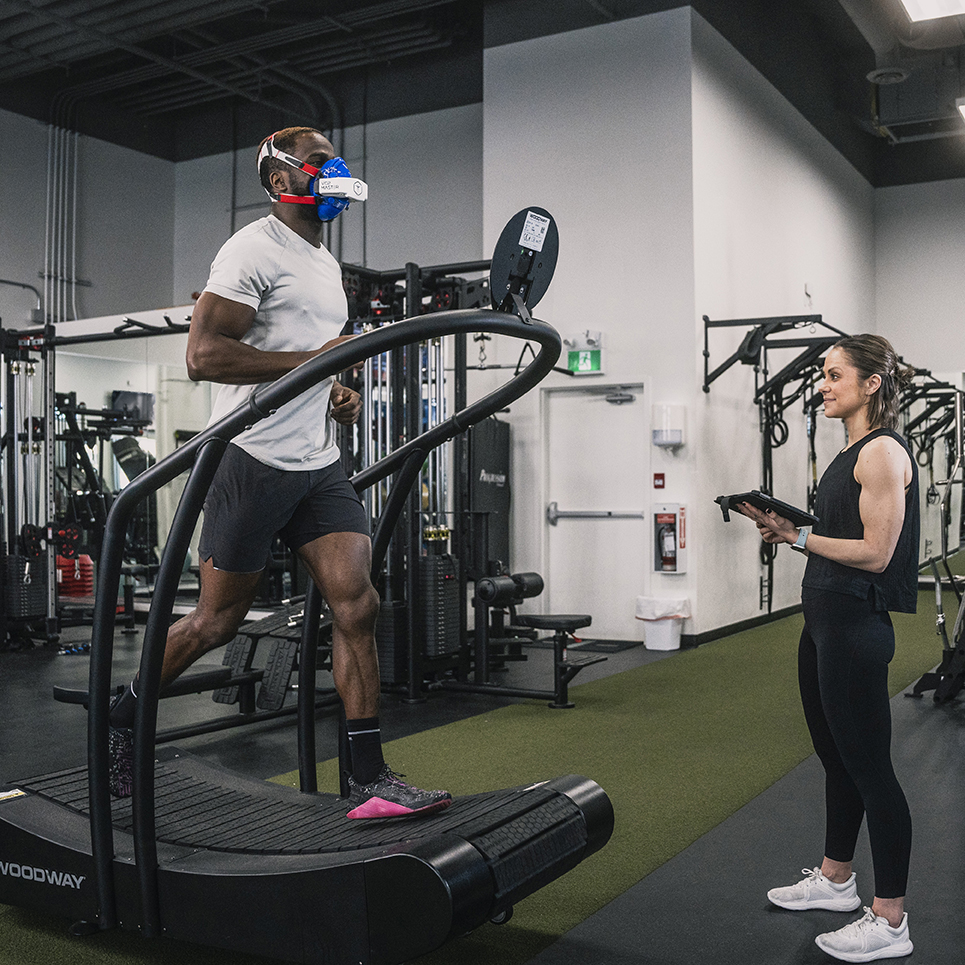
After a proper VO2 and lactate test (usually done via treadmill with progressive stages), you’ll receive:
- Heart rate training zones (based on your unique physiology)
- Threshold pace
- Insights into where your aerobic and anaerobic systems are underdeveloped
- Specific training prescriptions to raise your ceiling and push your threshold
No more “junk miles.” No more sessions that are too easy to help or too hard to recover from.
Real-World Example: From Testing to Transformation
Let’s say an athlete completes their lactate test and discovers that their threshold heart rate is 164 bpm. Previously, they had been doing most of her training in the 170–175 bpm range, thinking harder meant better.
The result? Constant fatigue, inconsistent results, and mid-race blowups.
Armed with new data, they shift 60% of her aerobic work to just under threshold—around 158–162 bpm—and keep their interval sessions sharp and structured above threshold. Within six weeks, they notice improved pacing in workouts and achieve a personal best in her next HYROX race.
That’s the power of precision.
Recovery, Overtraining, and Avoiding the Plateau
Beyond performance enhancement, testing helps athletes avoid common training pitfalls.
One of the biggest risks for HYROX athletes—who often train like CrossFitters but race like endurance athletes—is overtraining. Mixing intense strength sessions with long runs can easily lead to chronic fatigue if not carefully monitored.
VO2 and lactate tests can help spot signs of under-recovery and poor aerobic efficiency. A declining threshold or a VO2 max that fails to improve despite effort may indicate a need for rest or a change in training stimulus.
In this way, physiological testing becomes a diagnostic tool, not just a performance enhancer.
Not Just for Elites
Some athletes think VO2 and lactate testing are only for elites. But this couldn’t be further from the truth.
In fact, recreational and age-group HYROX athletes often benefit the most. They tend to have the widest gaps between their training intensity and what’s actually effective for their physiology. A simple test can save them months of wasted effort.
And with the accessibility of modern sports labs and mobile lactate testing kits, these tools are no longer confined to Olympic training centers—they’re available to anyone serious about improvement.
Final Takeaway: Measure to Improve
The HYROX course doesn’t care how hard you trained—only how smartly. Physiological testing is the blueprint for smart training. It provides you with the data to train with intention, the confidence to pace correctly, and the feedback to stay healthy and make progress.
Whether you’re aiming to break 70 minutes, qualify for the World Championships, or simply feel stronger and more in control during your race, VO2 max and lactate testing could be your missing link.
Train smart. Test often. Compete with confidence.
Interested in getting tested? Check out our testing packages here at Elite Performance NI.